
Dream Raiders 2: Wilds
DreamPlus GamesRole Playing
4.2135.00 Reviews
- Version
- 1.000.096
- Installs
- 100.00K
- Age Rating
- Mature 17+
Screenshots
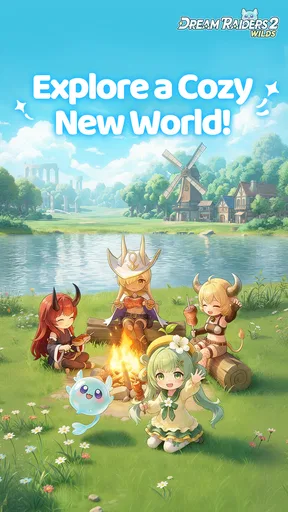
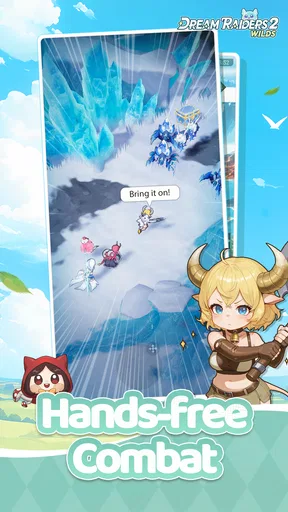
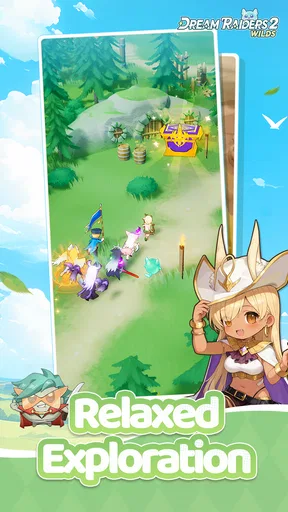
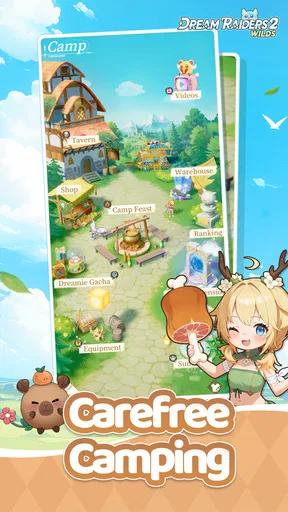
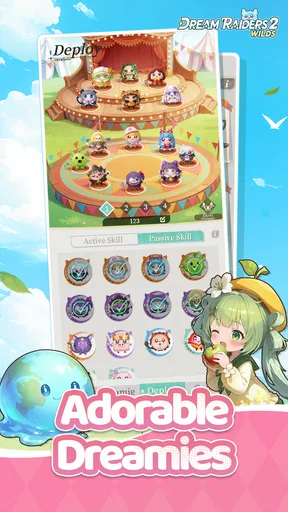

Our Review of Dream Raiders 2: Wilds
 Analysis by Appyee
I went into Dream Raiders 2: Wilds expecting a familiar role-playing game built around heroes, magic, and charming creatures, but what stayed with me was the way it asks me to think about progress rather than simply tap through battles. It is free to start, easy to approach, and clearly aimed at players who enjoy building a roster over time. At the same time, its mature rating and purchase range tell me that this is not designed as a completely casual children’s game, even though its creatures may look friendly.
My overall impression is positive, with an important qualification: this is best enjoyed as a long-term hobby rather than a quick game to finish in a weekend. The appeal comes from deciding where to spend attention, which heroes deserve investment, and when to push forward instead of repeating safer content. Those choices give the adventure more personality than its short store description suggests. The experience is not perfect, though. Players who want a tightly controlled, purely skill-based role-playing game may find the progression-oriented design less satisfying than a traditional premium title.
How the Wilds turn a simple adventure into a planning game
The basic attraction is clear. DreamPlus Games places the player in a fantasy setting filled with heroes, magic, and adorable creatures, then uses that setting as a reason to keep developing a team. I like that the presentation does not need to be grim to support meaningful decisions. The contrast between cute companions and a mature audience gives the game its own tone, although anyone choosing it for a younger player should pay attention to the 17-plus content rating rather than judging it by the artwork alone.
What makes the game interesting for me is the difference between making progress and making good progress. A new player can move ahead simply by following the available adventure path, but long-term results depend on resisting the urge to improve everything at once. In a roster-based role-playing game, resources are rarely valuable because they exist; they are valuable because spending them on one option means delaying another. I found myself asking whether a small immediate improvement was worth weakening my ability to prepare for a harder encounter later.
That is the first useful habit I would recommend: treat every upgrade as a decision about timing. If a character is already helping you clear current stages comfortably, saving materials may be wiser than forcing another small increase. If progress has stalled, however, hoarding everything can become its own mistake. The practical middle ground is to identify the part of the team that is actually causing the problem and improve that area instead of spreading resources across the entire roster.
This approach separates the game from role-playing titles that are mostly about watching numbers rise. The numbers still matter, but the player’s attention matters too. I had better results when I looked for the reason behind a failed attempt rather than assuming that every loss meant I needed a completely new team. Sometimes the answer is preparation; sometimes it is simply that I advanced before the current group was ready.
Roster choices matter more than collecting everything
The presence of heroes and creatures naturally encourages collecting, but I would not advise treating the roster like a checklist. A large collection feels rewarding, yet it can also pull attention away from the characters you actually use. The more sensible workflow is to keep a small working group, test its limits, and only then decide whether another character solves a real weakness.
For example, when a team repeatedly struggles, I would first ask three questions. Is the problem that it cannot survive long enough? Is it failing to deal with threats quickly? Or is the issue simply that the current stage is ahead of the team’s development? Those questions lead to different responses. Improving durability, increasing offensive pressure, or stepping back to build strength are not interchangeable choices, and spending blindly can leave the original problem untouched.
This is also where the game’s cute-creature angle becomes more than decoration. A creature that looks appealing may tempt me to invest immediately, but appearance should not decide the whole roster. The better test is whether the character fits the way I already play. Someone who enjoys experimenting can rotate unusual choices and accept slower progress. Someone who wants a dependable daily routine will probably prefer a smaller, more predictable group.
I found that planning around a core team also makes the game less tiring. Instead of checking every possible option after each reward, I can decide what role I need next and ignore distractions that do not support that plan. That is a small change, but it prevents the common problem of turning a role-playing game into an endless sequence of low-value upgrade decisions.
Risk and reward are felt through pacing
The most useful tension in Wilds comes from deciding how aggressively to pursue progress. Pushing forward offers the satisfaction of seeing new parts of the adventure, but it also exposes weaknesses in a team that looked strong a few moments earlier. Repeating easier content is safer and can help with development, yet too much caution makes the game feel like maintenance.
I prefer a measured rhythm: attempt the next challenge, observe exactly what failed, then make one meaningful adjustment before trying again. Changing everything at once makes it impossible to learn which decision helped. This method also creates a clearer sense of cause and effect, which is important in any game where several upgrades can appear useful at the same time.
A realistic everyday use case is a short evening session after work or school. I might have enough time for a few focused attempts, but not enough patience to rebuild the entire roster. In that situation, I would set one goal before opening the game: reach the next obstacle, strengthen the weakest link, or sort out which character deserves the next investment. That keeps the session productive even if I do not make major progress.
The trade-off is that the game may not always deliver a dramatic payoff during a brief visit. Some sessions are about preparation rather than victory. Players who need every login to end with a major unlock may find that frustrating, while players who enjoy gradual improvement will understand the appeal. I think the game works best when progress is measured by better decisions, not only by how far the map moves.
Purchases deserve the same careful attitude. The game is free, but optional items range from $0.99 to $99.99 each. That is a wide span, so I would not treat the presence of a low-cost option as proof that spending is necessary or harmless. My advice is to decide in advance whether you are comfortable spending anything, then judge each purchase by the amount of play it genuinely adds rather than by the excitement of a temporary shortcut.
For me, the biggest danger is buying to repair impatience. If a team is underprepared because I rushed, paying to move past the consequence may solve the immediate obstacle without improving my understanding of the game. A purchase can make sense for someone who already knows what they enjoy and wants to support that routine, but it is a poor substitute for learning which upgrades and characters actually fit their plan.
Adapting instead of blaming the first team
One of the stronger strategic lessons is learning when to change direction. It is easy to become attached to the first heroes or creatures that perform well, especially when they helped clear early content. That attachment can become a weakness if I keep investing in a setup that no longer matches the challenges ahead.
I would not replace a team after one disappointing attempt. A single failure can come from poor preparation or an unlucky sequence. Repeated failure is more informative. If the same weakness appears several times, I would make a targeted change and give it enough time to show whether it works. This avoids two opposite mistakes: stubbornly refusing to adapt and constantly rebuilding without learning anything.
Adaptation also means changing the goal of a session. Sometimes the right objective is not to win the hardest available encounter but to identify what the encounter is teaching. If the team cannot last, I need a defensive answer. If it survives but cannot finish, I need more pressure. If both sides remain close, better timing and resource allocation may matter more than adding another character. Thinking this way gives losses practical value.
The game is less suitable for players who dislike any uncertainty in progression. A puzzle game may offer a clean solution that can be repeated exactly, while a role-playing adventure usually asks for development before the solution becomes reliable. Wilds belongs to the second group. I enjoy that gradual process, but I would choose a different genre for a short, fully deterministic challenge.
Another adaptation skill is knowing when not to react. New rewards can make every alternative look urgent, but not every new option deserves immediate attention. I get more useful information by keeping the rest of the team stable while testing one change. That creates a simple personal record: what changed, what improved, and what remained a problem. Even without formal notes, that mindset reduces waste.
Why the game becomes more interesting over time
The long-term appeal depends on whether gradual development feels rewarding to you. The game has enough of a role-playing structure to make planning horizons important. I can think about what helps today, what supports the next difficult stretch, and what may become useful later. Those horizons do not always point in the same direction, which is where the depth comes from.
A short-term upgrade may help me clear the next obstacle, but a broader investment may produce a stronger team over several sessions. Choosing between them is not always obvious, and that uncertainty is healthier than a system where one option is permanently correct. I especially like the idea of reserving some resources for flexibility. A player who spends everything immediately may gain speed now but lose the ability to respond when a different weakness appears.
That does not mean saving everything is automatically smart. A plan that never converts resources into progress is just another form of avoidance. I would set a review point after a few attempts: if the current approach is still working, continue; if it has stopped producing results, invest in the clearest bottleneck. This creates a practical cycle of testing, adjusting, and reassessing instead of making permanent decisions based on first impressions.
The current version is 1.000.096, and the game runs on Android 7.0 or later. That makes it accessible to people using older supported Android devices, although the quality of play will still depend on the phone or tablet itself. I would check available storage, battery behavior, and how comfortably the device handles longer sessions before committing to Wilds as a main game. A supported operating system is useful, but it does not guarantee an equally pleasant experience on every device.
The game’s average rating is 4.2 from around 41 thousand ratings, with over 100 thousand installs. Those figures suggest that it has found an audience, but they should be read alongside the style of game it is. A positive reception will not change the fact that this is a progression-focused role-playing experience with a mature rating and optional purchases. I would use the rating as a reason to investigate further, not as a promise that it will suit every player.
Who should play it, and who should skip it
I would recommend Dream Raiders 2: Wilds to players who like collecting heroes and creatures, making gradual improvements, and thinking about when to spend resources. It is a good fit for someone who enjoys checking in regularly, setting small goals, and learning from a failed attempt. The fantasy setting also helps if you want something lighter in appearance than a relentlessly dark role-playing game.
I would be more cautious about recommending it to someone who wants a complete premium experience with no purchase pressure. The free entry point is helpful, but the in-app purchase range means spending choices are part of the environment. I would also steer away players who dislike repeated development, roster management, or sessions where preparation is more important than immediate victory.
Compared with a traditional single-player role-playing game, this feels better suited to ongoing engagement than to a carefully paced story that ends after a fixed journey. Compared with a purely casual game, it asks more from the player because choices about teams and timing have consequences over time. If you want deep character planning without committing to a long-running routine, a premium RPG may be a better alternative. If you enjoy returning to the same world and gradually refining your approach, Wilds has the stronger case.
The mature rating is another deciding factor. I would not hand it to a child simply because the creatures look adorable. Adults and older players should be the intended audience, and families should make that decision with the rating in mind. That is one of the easiest details to overlook when the visual style appears welcoming.
My strategy verdict after settling into its rhythm
Dream Raiders 2: Wilds works for me because it turns a colorful fantasy adventure into a series of manageable planning questions. Which character deserves attention? Is the next challenge worth pushing now? Did the last loss reveal a real weakness, or did I simply rush? Those questions give the game more staying power than a straightforward march from one battle to the next.
Its limitations are equally clear. Progress can feel slow when I want a dramatic result, and the free-to-play structure requires discipline around optional spending. The game is also a poor match for anyone seeking a compact, fully self-contained role-playing adventure. I would not recommend installing it casually without considering whether you enjoy long-term roster development.
For the right player, though, the free starting point makes it easy to test that rhythm without an upfront cost. I would begin by choosing a small core team, setting one goal per session, and delaying purchases until I understood what was actually slowing progress. I would also keep the 17-plus rating in view and treat the creatures as part of the game’s style, not as evidence that it is aimed at children.
My final view is that this is a thoughtful choice for patient role-playing fans who enjoy trade-offs more than instant rewards. DreamPlus Games has created an adventure where the best results come from paying attention to timing, team balance, and adaptation. If you enjoy making a plan, testing it, and improving it over several sessions, Wilds is worth trying; if you want immediate action with no progression management, choose a simpler alternative.
Verdict
Strengths of Dream Raiders 2: Wilds
- Fast-paced battles are easy to learn, even for casual players.
- Distinct raider abilities encourage varied team combinations.
- Wild-themed environments give exploration a lively visual identity.
- Short sessions make it convenient for playing on mobile.
- Frequent rewards help new players build a roster quickly.
Limitations of Dream Raiders 2: Wilds
- Progression can feel grindy when upgrading several raiders at once.
- Some encounters rely heavily on having the right team composition.
- The interface may feel crowded on smaller phone screens.
- Later stages can become noticeably more difficult without upgrades.
- Online features may be frustrating with an unstable connection.
Other Releases by DreamPlus Games
View All
Game of Sultans
Role Playing4.3
Similar Picks in This Category
View All
Hair Dye
CrazyLabs LTD4.4

Monster High™ Beauty Salon
CrazyLabs LTD4.5

Bus Simulator - Bus Games 3D
Jima Apps4.4

Flight Pilot: 3D Simulator
Wildlife Studios4.1


Super Stylist Fashion Makeover
CrazyLabs LTD4.4
Frequently Asked Questions
What is Dream Raiders 2: Wilds about?
Dream Raiders 2: Wilds is an adventure-focused mobile game that combines exploration, combat, character progression, and a fantasy wilderness setting. Players travel through dangerous areas, face hostile creatures, complete quests, and collect resources while developing their team or characters. The game is aimed at players who enjoy story-driven progression, discoverable environments, and a mixture of strategic decisions and action-oriented encounters.
Is Dream Raiders 2: Wilds free to download and play?
Dream Raiders 2: Wilds can generally be downloaded without an upfront purchase, but players should check the current listing on Google Play or the App Store for the exact pricing and availability in their region. As with many mobile games, optional in-app purchases may be offered for items such as currency, upgrades, cosmetic content, or progression-related advantages. Parents should review purchase settings before allowing children to play.
Does Dream Raiders 2: Wilds require an internet connection?
The connection requirements may vary depending on the feature being used. Core exploration or story content may be available in limited offline situations, but online access is commonly needed for account synchronization, updates, advertisements, cloud saves, events, leaderboards, or multiplayer-related functions. Before downloading, users with limited data should check the official store description and test the game on Wi-Fi to avoid unexpected interruptions or additional mobile-data usage.
Is Dream Raiders 2: Wilds suitable for children?
Suitability depends on the player’s age, tolerance for fantasy violence, and ability to manage optional purchases. The game may include combat, monsters, tense environments, and progression systems that encourage repeated play. Store age ratings should be checked because they can differ by country and platform. Parents should also review privacy permissions, chat or social features if available, advertising, and in-app purchase controls before installation.
What devices are compatible with Dream Raiders 2: Wilds?
Compatibility depends on the version released for Android or iOS, as well as the game’s current technical requirements. Players should verify the supported operating-system version, available storage, processor performance, and required permissions on the official store page. Older phones and tablets may install the game but experience longer loading times, reduced graphics quality, overheating, or crashes. Keeping the device and the game updated can improve stability.
Play our best games!


